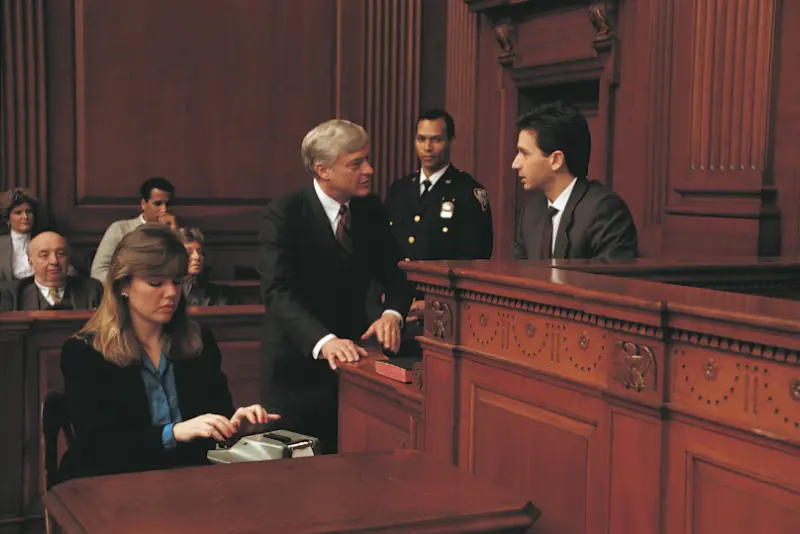
Most people never think about a courtroom. They get hurt, file a claim, and assume the insurance company will do the right thing. Chances are, they won’t. The insurer’s team starts looking for ways to pay you less the moment you file. They use tactics such as dragging out the process, questioning your injuries, and making lowball offers.
At Malibu Injury Lawyer, we prepare every case as if it’s going to trial. From day one. Not as a bluff — as a promise. When insurers know we’re ready to fight in court, they offer better settlements. What happens if your case goes to trial? Here’s exactly what that looks like.
Why Trial Preparation Changes Everything
Settlement talks aren’t magic. They depend on leverage. And leverage comes from one thing — the credible threat that your attorney will take this before a jury and win. Without it, the insurer has no reason to offer you what you deserve.
Our attorneys Matthew Blair and Oscar Ramirez have first-chaired trials and won seven-figure results. Insurers know that record. It follows us into every negotiation and changes how they respond. A strong settlement doesn’t start at the negotiating table. It starts the day we open your file.
How Evidence Collection Wins Cases
What happens if your case goes to trial and your lawyer hasn’t done the work? You lose. Evidence isn’t a nice-to-have — it’s everything.
From the moment we take your case, we move fast. We secure police reports, accident photos, surveillance footage, and witness statements before they vanish. On Pacific Coast Highway, skid marks fade within days. Security cameras overwrite. Witnesses forget. We also pull your full medical records and work with doctors who document your injuries in a way that holds up under cross-examination.
A 2025 Los Angeles case in which a woman was rear-ended by a commercial tractor-trailer operated by Services Group of America while stopped to make a lawful left turn. The defense argued she had braked suddenly and that her injuries were exaggerated. Plaintiff’s counsel rejected a $9 million settlement and a $5M/$15M high-low agreement before trial — because the evidence told a stronger story. The medical experts were prepared. The injury documentation was airtight. The jury saw it, credited the plaintiff’s case in full, and awarded $21.3 million — more than double the defense’s last offer. That gap between what the insurer offered and what the jury awarded existed because one side came prepared and the other didn’t expect it.
Whether you were hurt in a car accident, a motorcycle crash, a rideshare incident, or a slip-and-fall, our investigation is the same: thorough, urgent, and built to withstand scrutiny. Because when the jury room door closes, the side with better evidence wins.
Is Expert Testimony the Secret Weapon?
Yes. Experts can be the difference between full compensation and nothing. In a serious case, you may need a biomechanical engineer to explain causation, an economist to calculate future lost earnings, and a treating physician who can make your MRI results clear to a jury of twelve regular people.
We line up experts the moment a case heads toward complexity — before the insurer rejects our demand, not after. When we sit across from their lawyers, our expert reports are already written and ready to submit. Ask any client how Malibu Injury Lawyers helped them win their case after we sent those disclosures.
How Juries Decide Personal Injury Cases
Jurors respond to stories, not spreadsheets. They want to know who you are, what happened, and why the other side should be held accountable. A case built on cold facts and medical jargon loses them. A case built around your real experience — the sleepless nights, the job you couldn’t return to, the milestones you missed — stays with them in the deliberation room.
California’s civil jury instructions (CACI) govern what jurors hear and how they weigh evidence. Our attorneys know which arguments land and which fall flat — because they’ve been there.
A March 2025 Los Angeles verdict offers a real-world example of how juries evaluate the human impact of an injury. Briana Booth was driving on Avenue L in Lancaster when two other motorists collided and sent their vehicles directly into her path. She swerved to avoid them, hit a median, and flipped her car. She required spinal fusion surgery and lives with chronic pain. Her legal team didn’t just hand the jury a stack of medical records — they built a case around the full weight of what she lost. The Los Angeles jury awarded her $32.5 million. That number came from twelve regular people who understood, through a well-told and evidence-backed story, exactly how her life changed in one moment.
These types of jury-ready preparation standards we apply to every case we take to give you the rights you deserve.
Why Insurers Fear a Trial-Ready Lawyer
Insurance companies settle cases they expect to lose. Not out of generosity — because losing at trial costs far more than settling, and juries sometimes award more than anyone expected.
Think about what an insurer actually weighs before making an offer. They look at the strength of your evidence, the credibility of your experts, and the track record of your attorney. If any of those look weak, they lowball you. If all three look strong, their math shifts fast. A case that seemed worth $200,000 to them suddenly looks like a $2 million exposure — and they’d rather settle than find out which number a jury picks.
When an insurer’s attorney reviews a case file and sees complete expert disclosures, organized exhibits, deposition transcripts, and a clear liability theory, the math changes; suddenly, the cost of going to trial looks a lot worse than the cost of settling fairly. That’s not a coincidence — it’s exactly the pressure a well-prepared case is designed to create. That’s also why hiring a Malibu accident attorney could save you time, money, and stress — because the insurer on the other side already has a team working against you from day one.
How Settlement and Trial Work Together
Settlement and trial aren’t opposites. They’re a spectrum. How hard you can push on that spectrum depends entirely on how ready you are for the far end of it.
After we build your case, we send a demand: medical records, expert opinions, economic damages, and a clear statement of why we win. The insurer can settle fairly or face us in court. Most settle. When they don’t, we go to trial. We handle every case type— from truck accidents to slip-and-falls.
Frequently Asked Questions
What happens if my case goes to trial in California?
Your case goes before a judge and a jury of 12, who hear evidence, witness testimony, and arguments from both sides before reaching a unanimous verdict on liability and damages. California personal injury trials range from a few days to several weeks, depending on case complexity.
How long does a personal injury trial take in California?
Simple cases may resolve in two to three days; serious injury cases with medical experts, accident reconstructionists, and economists can run two to three weeks. Your attorney should give you a realistic timeline based on the specific facts of your case before trial begins.
Will I have to testify at trial?
In most cases, yes. Your testimony shows the jury who you are and how the accident changed your life — and it matters. Your attorney will prepare you for both direct examination and cross-examination so you feel confident on the stand.
What is the difference between a settlement and a verdict?
A settlement is a private agreement that resolves your case before or during trial in exchange for a payment. A verdict is the jury’s official decision. Settlements offer certainty and speed; verdicts can produce larger awards but carry more risk and take longer.
What if the insurer refuses to settle fairly?
Your attorney files a lawsuit, takes the case through discovery and depositions, and goes to trial. The credible threat of a prepared trial team often pushes insurers to improve their offers; if it doesn’t, the courtroom is where a firm like Malibu Injury Lawyer excels.
How does a jury decide how much to award?
California juries follow CACI instructions and weigh both economic damages — medical bills, lost wages, future earning capacity — and non-economic damages like pain, suffering, and loss of enjoyment of life. Expert witnesses are essential for helping jurors understand the full impact of serious injuries.
Does going to trial cost more than settling?
We work on contingency: you pay nothing unless we win, whether through settlement or verdict. We advance expert and court costs and recover them from your compensation. Going to trial can yield far higher awards, making the investment worthwhile.
What is the statute of limitations for personal injury cases in California?
California gives injury victims two years from the accident date to file a lawsuit. Miss that deadline and you almost certainly lose your right to compensation. Cases involving government entities carry even shorter notice windows — another reason to call an attorney immediately after an accident.
Your Case Deserves a Fighter, Not Just a Filer
Preparing a case for trial is hard work. Most attorneys would rather pocket a quick settlement fee and move on. We’re not those attorneys.
What happens if your case goes to trial with a Malibu Injury Lawyer beside you? The other side faces a prepared, battle-tested team that has done this before and won. Most insurers would rather settle than find that out.
Evidence fades, witnesses forget, and deadlines close in. Call us now at +1 310-919-0868 or contact us online for a free case review. You pay nothing unless we win — and we plan to win.